
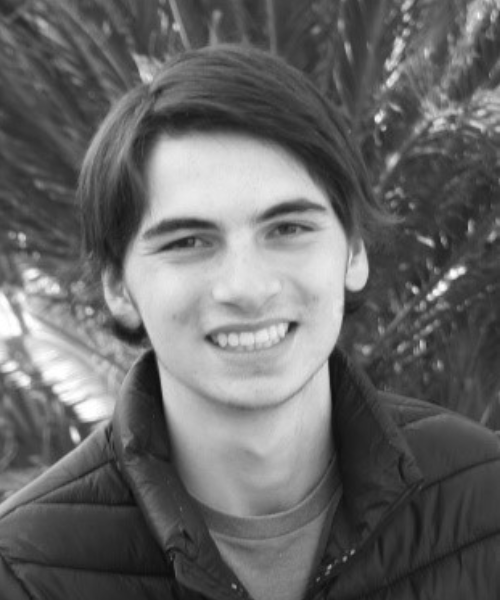

Matthew De Bie is a UK born South African author, who published his debut novel ‘Broken Horizon’ in 2023 (Read the review here). He explores complex and difficult themes such as inequality, violence and social disparity in his work. He attended Jeppe High School for Boys in Johannesburg. It was here that his desire to write was nurtured and matured both inside and beyond the classroom. His time there exposed him to South Africa’s harsh realities, contrasting sharply with the idealized fiction he read at that time. He graduated from the University of Pretoria in 2023. He currently works as a Statistical Analyst at a medical aid company. In this interview, he talks about his writing process, the publishing process of his novel, his writing style, interests and many more other things. Read this interview to get to know more about him.
Q- Describe your writing process and how long did it take for you to write your book? What is the most fun part of writing?
A- I started writing Broken Horizon in December 2019, though the story wasn’t called that at the time. In fact, I had no idea what exactly I was working on when I started writing. I tend not to plot my stories very much before I start writing them. I might sketch out a few notes or have a few ideas, but I find that once I start writing, the story often takes a life of its own. Instead of trying to bend everything into a pre-determined outline, I let the characters drive the narrative and I discover the story along with them.
I find that this approach results in situations which are both interesting and unexpected. And those unexpected scenarios are my favourite part of the writing process. As an author I love being in the situation where even I don’t know where exactly the story is going!
The first draft of Broken Horizon was completed by May 2020, and I spent the next three years editing and refining that draft.

It might be an unpopular opinion, but I really enjoyed the editing process. The first draft is about getting the bones of a good idea down on the page but it’s in the edit that those bones are transformed into an engaging narrative. I found that editing gave me a chance to really focus on the little details which ultimately brought the bleak world of Broken Horizon to life.
Me too. I love editing. Editing is king. But I don’t think I can handle the unpredictability. I am one of those who have to know where the story is going before they start writing. My next question is- What have been the literary influences on you? Which author’s work inspired you the most as a writer?
A– I believe very strongly in taking inspiration from as many diverse sources as possible. I have been reading since a very young age so it might be surprising that the work of fiction which probably inspired me the most was the movie ‘No Country for Old Men’ directed by the Coen brothers and which I later learned was based off a book by Cormac McCarthy.
The movie really opened my mind to what was possible with a work of fiction. The way in which it broke so many storytelling rules utterly fascinated me. I thought to myself, “How can a story possibly get away with doing this?” and next I thought, “Is that something I could also get away with?”
From there I really started looking at storytelling in a new light and sought out creators who weren’t afraid to break what we know as the ‘traditional rules’ of storytelling. Chief among those authors was the aforementioned Cormac McCarthy but also David Peace, the author of the deeply disturbing ‘Red Riding Quartet,’ as well as other movies/TV shows like HBO’s ‘Chernobyl,’ Martin Scorsese’s ‘Taxi Driver,’ and Denis Villeneuve’s ‘Sicario.’
Q. A message in your novel that you would want the readers to grasp?
A- My intent when writing ‘Broken Horizon’ was that I didn’t want to present the reader with a single correct answer to any of the questions or issues raised in the novel. The book deals with themes of oppression, revenge, societal decay, classism and conflict so instead of making some sort of broad and bland statement, I rather wanted to use the narrative to pose a series of questions which force the reader to evaluate themselves and their own morals.
I think that the big question asked by Broken Horizon, which perhaps becomes clearer as the novel progresses is that: “If the world was dying and there was nothing you could do to stop it, how would you act?” Would you just throw in the towel and look out only for yourself or would you try and do the right thing, even while knowing that it won’t fix the situation. Or maybe you’d just think that the world wasn’t worth that much anyway and then party up a storm while it all burns.
I think that that is the biggest takeaway I wanted readers to grasp. I wanted to challenge their perceptions and challenge their thinking, and hopefully, reading the novel will shift their perspective. Perhaps it’s a bit cliché but if Broken Horizon can make a difference to the way one person thinks then I will have done my job.
Trust me, I have read the novel and it does provoke you. There are things you never imagined before and it forces you to think. You are a first-time author. In my experience, even if you self-publish, the publishing process can be daunting and overwhelming. What are the challenges you faced while publishing your book?
A-The publishing process is definitely one of the hardest parts of the entire process of bringing a novel into the wider world. Especially as an international author, trying to break into the mainstream publishing market in the United Kingdom and United States is very tricky. Prior to writing Broken Horizon, I was very unfamiliar with the process of agents and publishing houses. It took a lot of time and effort to try and understand exactly how I was meant to engage with these various factors.
As with most authors, I had my fair share of rejections but ultimately, I think these were a blessing in disguise. Every rejection inspired me to make improvements to the novel which ultimately helped the final product. Eventually I reached a stage where I was happy with Broken Horizon and decided to go the self-publishing route and I am glad that I did. Self-publishing comes with its own challenges, but it was ultimately a very rewarding process.
Q- I believe that writing fiction is an act of rebellion. ‘Being a writer is no less than being a rebel.’ How far do you agree with this statement?
A-I think that all art is ultimately born from a place of suffering and suffering is the pain that the world is not as you want it to be. As authors, painters, directors, actors etc. we see the world around ourselves and we find it lacking. And it is that acutes sense of the absence which drives us to create art.
I’d say I agree that writing is an act of rebellion in the sense that, instead of accepting the world as it is, artists chose to create something which previously did not exist. And I think that is worth celebrating.
Q- What is your favourite motivational quote, in writing and in life?
A-“The hardest part of anything is getting started.”
Once you get started then the pieces fall into place as they’re meant to. It’s that first step, that first chapter, that first edit, that first heading which is toughest part of the writing process and indeed most things in life. Once you’ve taken that first leap, gone to the gym for the first time or paid that first instalment for a holiday then it all becomes easier.
Starting something is also an exercise in overcoming fear. We fear what we haven’t started because it’s unknown to us and, speaking from personal experience, I am very apprehensive about things I don’t understand. So, when there is something which needs to be done, I think of this quote, I muster my courage, and I make a start. Nothing else in the process is as difficult as making that first step and getting started.
Q- If your book was to be made into a movie, what actors would you choose for your characters?
A-Now this one is interesting because I do not really know what the characters in Broken Horizon look like. I have a broad idea of their key features and their habits, but I deliberately keep the descriptions of their physical appearance vague. Firstly, because I think that the most important aspect of a character is not how they look but how they speak and how they act.
I put a lot more effort into trying to determine what the characters’ voices sound like and questions like: “Do they have an accent? Do they mispronounce certain words? What type of slang do they use? What sort of tone do they speak with?” than I do in trying to determine exactly how they look.
Secondly, I want the reader to develop their own image of the characters in their mind. So, it’s difficult to think which actor’s I’d cast to fill the roles of the various key players in Broken Horizon.
However, I have spent a lot more time thinking about who I would want to handle the technical aspects of the film. Dennis Villeneuve would be my first choice as a director. His work on Prisoners, Sicario, Bladerunner 2049 and recently Dune has been outstanding and was a huge source of inspiration for me. Roger Deakins, who worked on No Country for Old Men, The Assassination of Jesse James, and 1917 is, in my opinion, the best cinematographer working today. And for the musical score I don’t think anyone could do it better than Hildur Gudnadottir, known for her work on Chernobyl and Joker. Gudnadottir used the actual sounds of a nuclear power station to compile the music for Chernobyl and that heavy, industrial undertone is something that would perfectly fit the setting of Broken Horizon.
Q- What are some of your other interests besides writing?
A-Reading is the obvious one but I think the same is true for all writers so I don’t know if that counts. I believe very much in a ‘Healthy body, Healthy mind’ philosophy so I try and keep as active as possible. Like most people in their mid-20s I have recently joined a few running clubs, and I thoroughly enjoy it. I also play padel and squash as often as I can. I’ve also recently taken up chess which has seriously hooked me in and I occasionally shoot firearms for recreational purposes.
Beyond these hobbies, I am very interested in history, particularly recent history of the last century. I strongly believe that, in order to make sense of the presence, we need to understand the past.
With this in mind, I seek out old books, documentaries and museums to learn as much as possible. I have travelled to Eastern Europe twice in the last few years because I find the history of the region so fascinating. You’ve got the age of imperialism, the rise of fascism, World War 2, the Cold War, the collapse of the communism… and that’s just in Berlin! I am very passionate about travel and I think that engaging with other cultures, seeking out places that are maybe a bit off the beaten tourist path, and making the effort to learn about other nations is very important for personal development and for improving my own writing.

Q- Tell us about your other works and writings. What do you have planned for the future? Is another novel in the works?
A-I have written a few stage-plays, and I have also written several short stories and alternate-history scenarios, the latter of which you can track down on various internet forums.
As for Broken Horizon, a potential sequel wouldn’t be a direct continuation of the story in a traditional sense as I think that the main plot threads are tied off nicely by the end of the novel. Rather, a sequel would focus on telling new stories from the same world and would highlight different characters, some of whom only appear in Broken Horizon for a few brief scenes. But any potential sequel is a long way off and I would only tackle it if there were interesting stories to tell and questions to engage with.
My next big project is a novella called ‘Perpetuity.’ Inspired by subversive Westerns like Blood Meridian and Bone Tomahawk, the novella blends the Fantasy, Western, and Horror genres. The story depicts a gang of outlaws who are contracted to murder Fae-type creatures by the government of a human kingdom. At the core of the narrative is the interplay between the leader of the gang; a proud Fae noblewoman captured by the outlaws; and a sinister figure in a jester’s outfit who follows the gang around.
It will probably be a few more years until ‘Perpetuity’ sees the light of day but I am very excited with how the story is turning out so keep a look out for it!
Thank you, Matthew! It was a delight to do this interview with you. Congratulations on your novel and Good Luck for your future endeavors. I hope we conduct another interview when you publish your next book.
If you have any other questions for Matthew, drop them in the comment section.

Leave a Reply