
RomComs have always been my comfort watch. Movies like You’ve Got Mail, 50 First Dates, Serendipity and Sleepless in Seattle feel like a hug. These are the films I can watch over and over and not get tired.
In recent years though, the magic of RomComs has faded. That’s not to say there haven’t been great rom-coms. Films like Crazy Rich Asians and Holidate were good enough to maintain the charm of the beloved genre but most of the others have failed to live up to the charm and wit of the classics of the 90s or the 2000s.
Much of it has to do with the fact that these new romcoms all look the same with impossibly attractive leads, luxurious lifestyles and picture perfect romances. The streaming platforms are stuffed with overused tropes such as fake dating, royal romances, Christmas settings and destination weddings as well as steamy makeout scenes without any chemistry buildup. There is a lack of authenticity and good dialogue which was the foundation for the earlier romcoms.
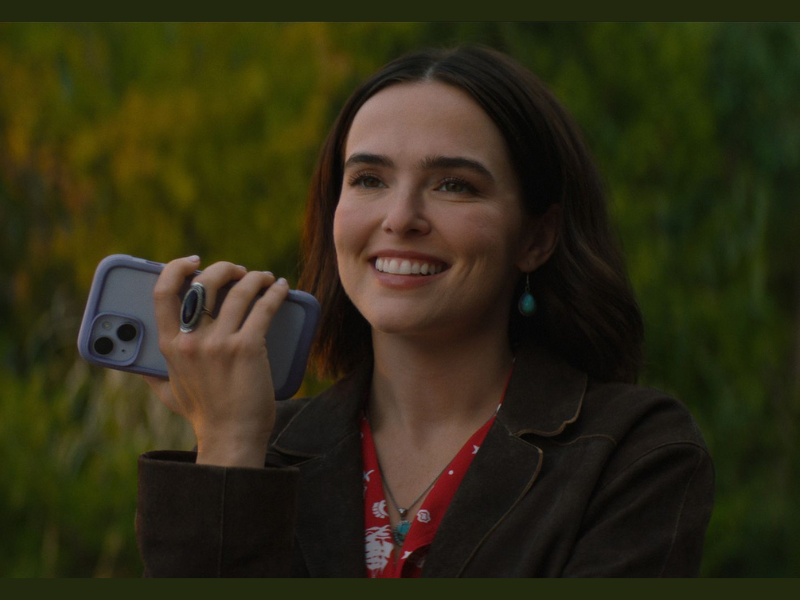
Voicemails for Isabelle feels like a fresh breath because it actually makes us care about the leads before setting them up. Zoey Deutch plays Jill (an aspiring baker) who is coping with the loss of her sister Isabelle who died after a long illness. The scene when she reaches the hospital and her parents break the news was just heartbreaking.

To deal with her grief, she starts leaving voicemails on her sister’s number talking to her as if she is still alive. What she doesn’t know is that the number has been reassigned to a real estate agent named Wes (Nick Robinson), and he is the one getting the voicemails.
Wes uses the information from the voicemails to track her down and be a part of her life. It does seem a bit creepy since he acts out her fantasy after listening to her talk about it (nothing serendipitous here). Still, they develop a real connection and form a genuine close bond.

The best part is that the film doesn’t make technology the villain. Instead, it becomes a means to deal with grief, make connections and store memories. The voicemails are very much a part of the film’s narrative. The film embraces the modern reality of technology actually shaping and moulding our lives. Meaningful relationships don’t always begin by chance encounters in bookshops or cafes, they can begin with a text, a call, through social media or voicemails.
The other part I found most refreshing is that it doesn’t try to promote the whole ‘love heals grief’ thing. The purpose of Jill’s loss is not to bring Wes into her life. Her grief has a space of its own and takes its own time. Wes does not rescue her from her sorrow nor she is looking for love to replace grief. The love she had for her sister will always be there and any romantic feelings she has for someone can never replace that love.
Jill heals in her own way and in her own time. In doing so, the film separates healing from romance while still allowing the two to coexist. She doesn’t heal because she falls in love; she slowly becomes capable of loving again because she has allowed herself to grieve.
There are other parts of the movie which I enjoyed. One is obviously the dance routine on Robyn’s ‘Dancing on my Own’ which captures the film’s quiet optimism without being over sentimental.

The other is Leah McKendrick, who not only plays the role of Breeda (one of Wes’ best friends) but has also written and directed the film. With the perfect balance of wit, humour and most important, emotional weight, she has once again proved that the genre is very much alive and has plenty of stories still left to tell.
However, in this romantic comedy, the real romance is not between Jill and Wes but between Jill and Isabelle, the sister duo. Even though Isabelle dies earlier in the film, she remains the central focus of the film’s emotional core. The film reminds us that romantic love isn’t the only love worth celebrating. Sometimes, the relationships that define us the most are the ones we are born into.
Voicemails for Isabelle isn’t just a story about finding love again; it’s about learning to carry love forward. It quietly reminds us that the most enduring love stories are often the ones that don’t begin with romance at all.

Leave a Reply